Support this work
This catalog represents hundreds of hours of research across 400,000 known tablets. If it’s opened a door for you, consider supporting the next one.
♥ Support on Venmo @yaweimusicSupport this work
Every series here took weeks to research and build. If you want more — more series, more tablets, more depth — your support makes that possible.
♥ Support on Venmo @yaweimusicPrivate Collections & Unknown Holdings
The tablets in the main catalog represent what is publicly known. A significant volume of cuneiform material exists outside the public record. The most important tablets may be exactly the ones we do not have access to.
Support this work
The most important tablets may be the ones we can’t access. If you want this catalog to keep documenting what’s hidden, consider supporting the work.
♥ Support on Venmo @yaweimusicConcepts
Conceptual frameworks extracted from across the corpus — patterns that emerge when you read the texts together.
Support this work
These frameworks took years of reading across multiple disciplines to develop. If one of them shifted something for you, consider dropping a contribution and letting me know which one.
♥ Support on Venmo @yaweimusicCross-Cultural Connections
The same structures, figures, and cosmological frameworks appear independently across multiple ancient traditions. These connections are documented.
Noticed a connection we missed?
This catalog is built on the belief that no single researcher sees everything. If you’ve found a cross-cultural parallel, a shared figure across traditions, or a pattern that appears in multiple ancient sources — submit it below. Reviewed submissions may be added to the catalog.
Glossary
Key terms from the Sumerian and Akkadian corpus — with literal translations, phonetic pronunciation, and notes on how they have been mistranslated.
Support this work
If knowing how to actually pronounce Anunnaki made you smile, consider supporting more content like this.
♥ Support on Venmo @yaweimusicLearn
The truth doesn’t reveal itself all at once. It comes in layers — one book at a time, one question leading to the next. These are the books that shaped how this catalog thinks. Not a complete bibliography — a curated starting point for people who are ready to go deeper than the official version. Some of them will change how you see everything.
Recommended Reading
Books that shaped this catalog — alternative history first, scholarly translations second. Each one is worth your time.
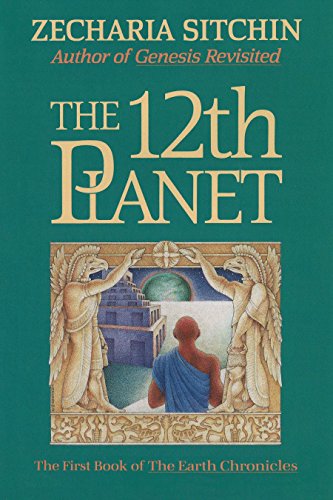
The book that started everything. Sitchin’s literal reading of Sumerian texts argues the Anunnaki were an extraterrestrial civilization from a 12th planet called Nibiru who created humans as a labor force. Controversial, meticulously researched, and impossible to dismiss without engaging with the primary sources. The foundation of the ancient astronaut hypothesis and the reason this catalog exists.
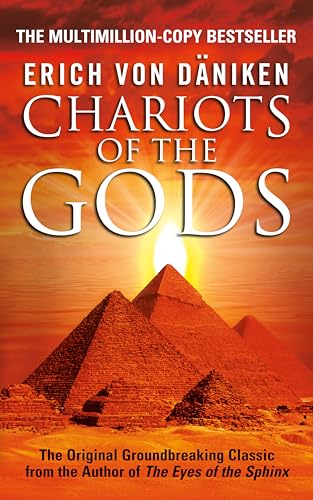
The original ancient astronaut book — published in 1968 and still the most widely read entry point into this field. Von Däniken asks why ancient civilizations around the world built structures that seem to require advanced technology, and why their texts describe beings from the sky. The question is still unanswered. Start here if you’re new to the subject.
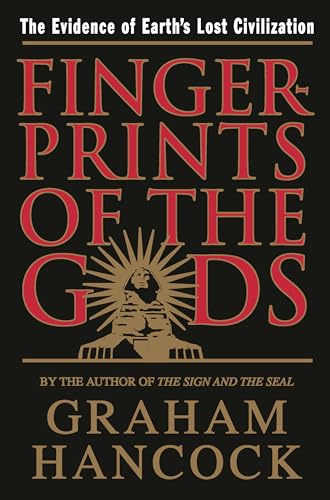
Hancock’s landmark investigation into the evidence for a lost advanced civilization that predates all known history. Covers the geological, astronomical, and architectural evidence across multiple ancient cultures. The most rigorous mainstream-adjacent alternative history book ever written. Changed the conversation permanently.
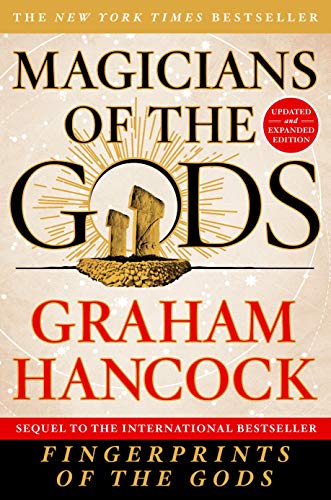
The follow-up to Fingerprints, incorporating the Younger Dryas impact hypothesis — the growing scientific evidence that a comet strike around 12,800 years ago caused the flood events described in the Sumerian, Akkadian, and Biblical traditions. Bridges the gap between alternative history and emerging mainstream science.
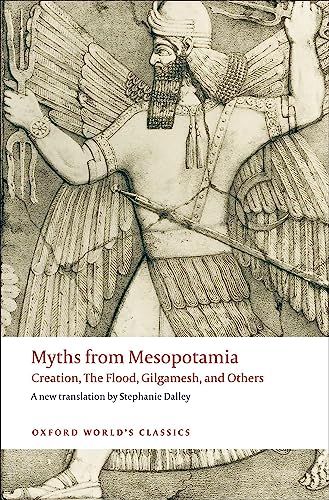
The standard scholarly translation of the major Mesopotamian texts — Atrahasis, Enuma Elish, Gilgamesh, Descent of Ishtar, and others. Dalley’s translations are rigorous and readable. Essential for anyone who wants to read the primary sources before reading what others say about them. The scholarly counterweight to every book above it on this list.
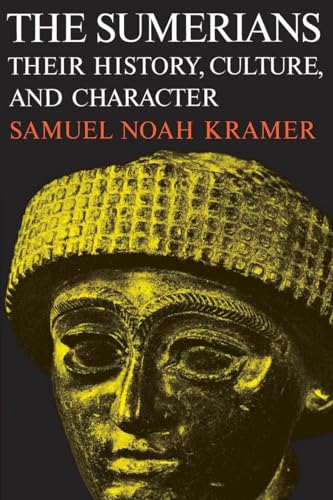
The most accessible scholarly introduction to Sumerian civilization ever written. Kramer spent his career translating the tablets and had the rare gift of being able to explain what he found to non-specialists. If you want to understand who the Sumerians were before you dive into what their texts say, start here.
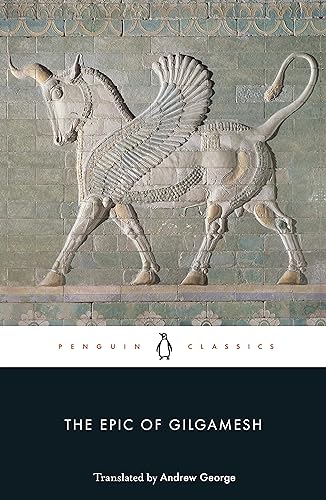
The best modern scholarly translation of the complete Gilgamesh corpus — including all known fragments, variant tablets, and the Old Babylonian version that differs significantly from the standard. George’s introduction alone is worth the price. If you read one scholarly translation from this list, make it this one.
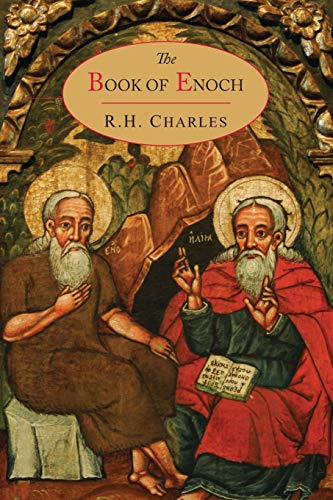
The pre-Biblical text that didn’t make the canon. Enoch describes 200 Watchers — the “sons of God” — who descended to Earth, took human wives, produced giant offspring (the Nephilim), and taught humanity forbidden knowledge: metalworking, weaponry, cosmetics, sorcery, and astrology. Read this alongside the Atrahasis Epic and the parallels are not metaphorical. The Watchers are the Anunnaki. This is the same story from a different tradition. Excluded from the Biblical canon at the Council of Laodicea in 364 AD. Still canonical in the Ethiopian Orthodox Church. Draw your own conclusions.
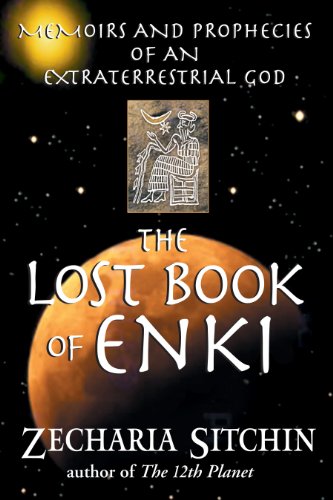
The companion to The 12th Planet and the most direct engagement with the tablets as first-person narrative. Sitchin reconstructs the memoirs of Enki himself — the Anunnaki leader most associated with human creation, genetic knowledge, and dissent within the divine hierarchy — using fragments scattered across twelve known Nippur tablets as scaffolding. The complete Anunnaki story from their perspective: the arrival from Nibiru, the gold mining operation, the creation of humans, the flood, the post-flood settlement. Essential reading after The 12th Planet. This is where much of this catalog’s alt history lens comes from.
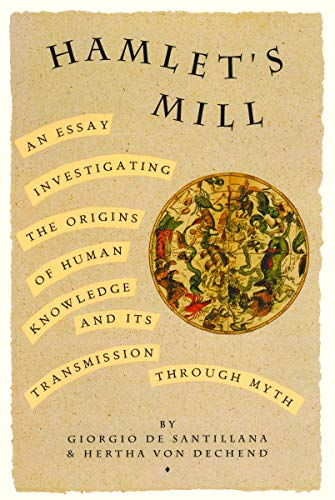
Two MIT scholars spent years documenting that the world’s mythologies encode advanced astronomical knowledge — specifically the precession of the equinoxes. The same story appears across dozens of independent traditions on every inhabited continent: a mill that grinds, a world axis that wobbles, a golden age that ends. Their conclusion: ancient myth is not primitive storytelling. It is the scientific language of a civilization that understood the cosmos with precision. The most rigorous scholarly argument that advanced knowledge existed before recorded history. Not a light read — but essential.
Learn to Read Cuneiform
If you want to read the tablets yourself — not translations, the actual clay — this is how you start.
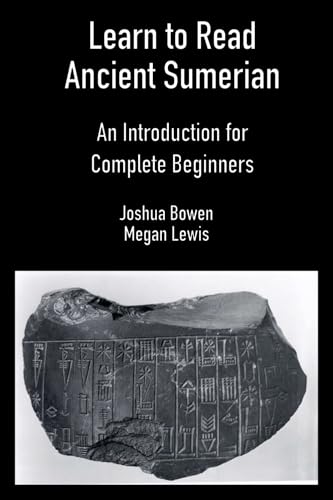
The only beginner-friendly Sumerian grammar in existence. Written by two Johns Hopkins Assyriologists specifically for people with zero linguistics background — no jargon, no assumed knowledge. 11 chapters building from basic grammar to reading actual cuneiform inscriptions from photographs. Every chapter includes vocabulary lists, cuneiform sign lists, and exercises written in actual cuneiform. Companion video lessons at digitalhammurabi.com. If you want to read these tablets yourself, this is where you start.
Free Resources
Grammar (free PDF)
Jagersma — A Descriptive Grammar of Sumerian. 700 pages, free download. The most complete Sumerian grammar available.
Dictionary
ePSD2 — Electronic Pennsylvania Sumerian Dictionary. Look up any word in the corpus.
Texts
ETCSL — Oxford. Every major Sumerian literary text with transliteration and translation.
Video
Digital Hammurabi. Companion videos to the Bowen & Lewis grammar. Free on YouTube.
Book links are affiliate links. Purchases support this catalog at no extra cost to you.
Support this work
The best way to support this catalog from the Learn page is simple — buy a book through one of the links above. Every purchase earns a small commission at no extra cost to you, and it helps fund more research series like this one. You can also support directly below.
♥ Support on Venmo @yaweimusicAbout This Catalog
Why I built this
I believe everyone deserves access to this information. These texts are among the oldest records of human existence — they describe where we came from, who we are, and what we might be capable of. For too long this knowledge has been locked behind academic paywalls, translated through theological bias, or dismissed entirely by mainstream institutions that have a vested interest in keeping the official narrative intact.
This catalog is my attempt to bridge that gap — bringing rigorous scholarship and alternative history research together in one place, with both lenses presented honestly and without agenda. The texts say what they say. I am not here to tell you what to believe. I am here to make sure you have access to the primary sources so you can decide for yourself.
The truth has always been in the clay. It has been waiting for 5,000 years. This catalog is one small effort to make sure it reaches the people who are ready to read it.
Questions or feedback?
Found an error, have a suggestion, or just want to connect? Send it below or reach out on social.
Support This Work
This catalog takes significant time and research to build. If it's been valuable to your research, consider supporting its continued development — every contribution helps me build more series like this one. I'm also open to topic suggestions from supporters — drop your suggestion in the comments with your donation. What rabbit hole should we go down next?
♥ Support on Venmo @yaweimusicHow this catalog works
Each entry presents two readings side by side: the scholarly mainstream interpretation established by Assyriology, and the alternative history lens — reading the same texts as literal records of non-human involvement, advanced technology, genetic engineering, dimensional cosmology, and cyclical civilizational intervention.
Neither lens is privileged. Every entry applies a three-tier structure: what the text states directly, what can be reasonably inferred from the pattern across multiple texts, and what is interpretation or speculation. These are kept clearly distinct.
Translations throughout this catalog are literal — stripped of religious overlay and later theological framing. The Anunnaki are rendered as a class designation, not a theological category. Physical descriptions are rendered physically. Administrative language is rendered administratively.
Primary Resources
- DatabaseCDLI — Cuneiform Digital Library Initiative
- Literary CorpusETCSL — Electronic Text Corpus of Sumerian Literature
- DictionaryePSD2 — Electronic Pennsylvania Sumerian Dictionary
- CommentariesCCP — Cuneiform Commentaries Project (Yale)
- YouTubeToldinstone — Prof. Irving Finkel (British Museum)
Questions or feedback?
Found an error, have a suggestion, or just want to connect? Send it below or reach out on social.